In the maintenance system of the railway sector there is one rule that is executed by default and barely needs discussion: during maintenance, replace every гидравлик хоолой on the vehicle.
This rule has its rational side — inspection windows are concentrated, downtime is controllable, and nothing gets missed. But it also hides a major cost item and a safety item that is easy to overlook.
Thбөгөөдrticle avoids empty debate on "should everything be replaced". It does three things: puts the numbers behind this convention on the table, presents a condition-based assessment method that болно executed on site, and explains clearly how хоолойн угсралт suppliers байх ёстой evaluated.
1. First, Lay Out the Market Size and the Cost of the Convention
Take Jinying Heavy Industry Co., Ltd. (301048.SZ) as an example. The public data of this leading rail engineering equipment company helps us see the shape of the market. Its actual controlling shareholder is China State Railway Group, its main products are large track maintenance machinery, rail vehicles, catenary work vehicles and containers, and энэ нь registered in Xiangyang, Hubei.
Key data from the 2025 annual report:
| Metric | 2025 figure | Year-on-year | Note |
|---|
| Revenue | RMB 3,200 million | +0.48% | — |
| Rail engineering equipment segment revenue | RMB 2,563 million | +7.26% | 80.09% of total revenue |
| Railway engineering machinery revenue | RMB 2,064 million | +6.93% | 64.51% of revenue |
| Repair business (including overhaul) | RMB 687 million | +11.22% | Main driver of aftermarket growth |
| Parts sales business | RMB 498 million | +8.66% | Keeps expanding with the installed base |
| Total newly signed sales contracts | RMB 4,000 million | All-time high | — |
Repair business of RMB 687 million plus parts sales of RMB 498 million is roughly RMB 1,185 million — the aftermarket base that accumulates as the installed base grows. Hoses hide inside these two numbers: they are not a one-off purchase, but a consumable that repeats in every maintenance round and grows linearly with the installed base.
Using industry engineering estimates (the following are estimated ranges, not officially disclosed data from Jinying Heavy Industry):
| Equipment category | Hose assemblies per machine | Hose length per machine | Total value per full replacement (estimated) |
|---|
| Rail vehicles / catenary work vehicles | approx. 15~30 pieces | approx. 12~25 m | approx. RMB 8,000 ~ 15,000 |
| Large track maintenance machinery (grinders, etc.) | approx. 25~45 pieces | approx. 25~45 m | approx. RMB 12,000 ~ 25,000 |
How to do the arithmetic
Assume the value of a full replacement on one machine is RMB 12,000. For a locomotive depot running 200 units, one full replacement round per year means RMB 2.4 million of hose spend; the collection of depots of comparable size nationwide бөгөөд market of considerable scale, and a highly repetitive one.
But the real question is not the total volume. It is what this money actually buys.
2. The Two Real Costs of "Full-Vehicle Hose Replacement"
Cost one: throwing good hoses away with them
The real service life of a hose set, from service to scrap, is decided by operating conditions, not by the maintenance schedule. On the same vehicle, hose life at different positions can differ severalfold:
- Static or low-frequency dynamic lines (fixed-position piping, instrument and control circuits): 5 years or more;
- Medium-frequency dynamic (lifting, auxiliary travel circuits): approx. 1~3 years;
- High-frequency dynamic (working mechanism reciprocation, shock load circuits): 6 months ~ 1.5 years;
- Severe conditions (ballast impact, чичиргээ, continuous wear points): possibly only a matter of months.
Replacing all of these hoses together at the maintenance node means that in practice: a large number of hoses still in healthy condition are scrapped early, and a considerable share of the removed hoses are in good condition themselves.
A common misconception байх ёстой cleared up here: replacing a good hose early costs not only the hose itself, but also crimping labour, disassembly and assembly labour, machine downtime window occupancy, and recycling and disposal of the old hose. In depots where the inspection window is tight, labour is often scarcer than material.
Cost two: the genuinely dangerous hoses may be hidden by the "cycle"
This нь more critical and more frequently overlooked side.
"Full-vehicle replacement" carries a dangerous hidden assumption: when the cycle comes around, the hoses that are going to fail will naturally be replaced. But reality is that hose failure is not evenly distributed.
- Whether a hose fails depends on the combined result of the actual dynamic load, bending frequency, temperature, чичиргээ, fluid erosion and external wear at the position where it sits;
- A hose that has long carried the same load at the same position accumulates fatigue continuously;
- A maintenance schedule cannot reflect cases жишээ нь "the actual duty severity at one position on one vehicle is three times the average".
The result is: the hoses most likely to fail early are precisely those that looked intact at the last maintenance and were judged "not yet due". They stay on the machine and keep running through the next working window.
For an industry whose annual maintenance cycle is measured in tens of thousands of kilometres and where safety нь absolute baseline, this logic does not hold.
3. The Right Approach: Periodic Inspection + Condition Determination + Preventive Replacement at Critical Positions
The two costs above point to the same solution — replacing the "time dimension" with the "condition dimension". Executed in three layers:
Layer one: inspect on schedule, tiered by frequency
The Ministry of Railways' Rail Vehicle Management Rules set clear baselines for maintenance intervals: routine maintenance every 2000~3000 km or one quarter; minor repair every 8000~10000 km or half a year; overhaul every 80000~100000 km or 5 years.
Hose inspection болно hung on these existing nodes; no separate system is needed:
| Frequency | Inspection content |
|---|
| Every shift / daily | Visual check of гадаргуу, холбогч нэвчилт, oil traces on the ground, abnormal oil level |
| Weekly | Close check of bend areas, холбогч нэвчилт and corrosion, clamp and guard fixing, friction or interference with surrounding parts |
| Monthly / every 250~500 hours | Full visual inspection hose by hose, manual bend-recovery test, records filed |
| Quarterly / every 2000~3000 km | Pressurized inspection (mind safe clearances), confirmation of system pressure and oil temperature |
| Annually / before overhaul | Whole-vehicle hose condition assessment, replacement plan for the following year |
Layer two: six condition determination signals — replace if any one appears
This layer нь red line of "what байх ёстой replaced байх ёстой replaced", and the core tool for replacing the "full-vehicle replacement" habit:
| No. | Inspection item | Action |
|---|
| 1 | Outer cover | Fine crazing, hardening, blistering, peeling → replace immediately |
| 2 | Hose body shape | Local swelling, bulging, distortion → replace immediately (wire layer broken or delaminated) |
| 3 | Fitting area | Oil нэвчилт, sludge build-up, corrosion, crimp sleeve displacement or cracking → replace immediately |
| 4 | Reinforcement layer | Cover worn through exposing wire, or wear depth exceeding 1/3 of the cover thickness → replace immediately |
| 5 | Bend area | Creasing, whitening, permanent distortion → replace immediately (stress concentration point, fails first) |
| 6 | Installation condition | Twisting, missing guard / spring guard, hard contact with structural parts → rectify, replace if it cannot be rectified |
Supplementary criteria: hoses in service for more than 4~5 years have entered natural ageing even if appearance is intact, so replace them preventively; shorten inspection intervals where system oil temperature runs high for long periods or the oil is heavily contaminated.
Layer three: unconditional preventive replacement at critical positions
Condition determination does not mean "drag it out as long as possible". The following positions байх ёстой replaced preventively on a fixed cycle or hour count, without waiting for condition to deteriorate:
- High-pressure main oil lines (main pump discharge, before and after the main хаалт block);
- Working mechanism circuits (grinding, tamping, ballast screening болон бусад high-frequency reciprocating and shock positions);
- Braking and safety-related circuits;
- Hose sections near high-temperature zones and exposed to radiant heat;
- Exposed hose sections that run long-term within rubbing zones of ballast, sleepers and rail head.
The logic of these three lines together is: leave the hoses you are "not sure whether to replace" to condition determination, and leave the hoses that "will definitely fail" to the preventive cycle. Full-vehicle replacement then falls back from "the only option" to "a fallback for severe conditions."
4. Why "Accurate Replacement" Matters More Than "Frequent Replacement" — and What It Means for Hose Assembly Suppliers
From a procurement management perspective, once you enter condition-based mode, the demands on the supplier rise across the board. This is exactly where an integrated хоолойн угсралт service provider earns its place — it sells not rubber and wire, but the certainty that lets you dare not to replace the whole vehicle.
First, individual pressure testing plus batch traceability нь precondition for condition determination.
If you cannot confirm that every hose fitted is qualified, then "what байх ёстой replaced байх ёстой replaced" turns in practice into "we replace everything every time" — because you have no basis for judging what can stay. So individual pressure test reports and batch traceability are, in essence, the technical precondition of running a condition-based replacement policy. KUNGFLEX pressure-verifies every hose before shipment and issues an inspection report, with traceable batches. That нь infrastructure that upgrades maintenance decisions from "experience" to "data".
Second, fluid compatibility validation decides whether you fall into the trap of "replaced but still unusable".
Rail engineering machinery has one special case: grinders and switch grinders typically run water-glycol fire-resistant гидравлик шингэн (жишээлбэл paired with Dow UCON HP5046D and UCON EHC846), because fire protection requirements on railway lines are rigid. In water-glycol media:
- Polyurethane битүүмжлэлs swell fast, soften, break down and fail — they байх ёстой replaced;
- Ordinary NBR inner liners require immersion validation — long-term contact causes swelling that reduces the дотор диаметр, cuts flow and degrades strength;
- When changing the fluid, the whole hose set байх ёстой replaced — changing only the холбогч битүүмжлэлs is not enough.
If the supplier cannot provide validation data for the fluid in question (volume change rate, суналтын бат бэх retention), then on a fire-resistant гидравлик шингэн system even the act of "replacing hoses" carries a risk of failure — which is precisely the source of "we replaced it and it still leaks" complaints.
Third, ultra-өндөр даралтын validation capability decides whether you dare step up a pressure class.
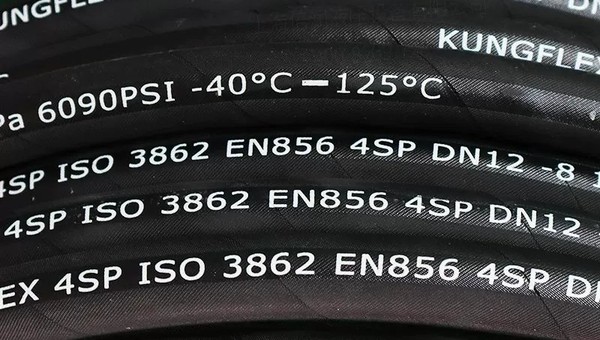
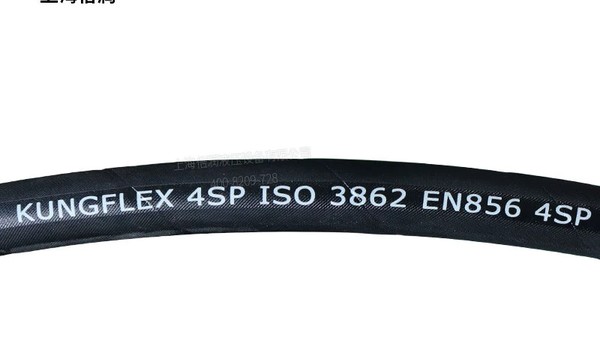
Condition determination means allowing hoses to be managed by class at different positions: 2SN for ordinary circuits, stepped up to 4SP for main pump and work circuits, and 4SH for high-frequency shock positions. For thбөгөөдrchitecture to hold, the supplier needs at least quantified test capability to answer "can 4SH withstand this duty". KUNGFLEX has 4000 kg / approx. 400 MPa ultra-өндөр даралтын гидравлик хоолойн угсралт тэсрэлтийн туршилтing capability (about 10 times standard ажлын даралт), supported by 17 years of accumulated experience, ISO 9001:2015 certification, direct supply from a 2000 ㎡ workshop in Nantong, and a delivery system exporting to more than 80 countries and regions — capable of handling OEM annual supply and railway bureau framework purchasing.
Fourth, full-range self-supply makes "replace only what is needed" genuinely executable.
Condition determination presumes you can replace a single hose — if one hose involves the hose, the холбогч and the sleeve and requires stitching orders across suppliers, precise replacement simply cannot be executed. KUNGFLEX supplies the full range of хоолойн угсралт: 2SN (EN 853 2SN / SAE 100R2), 4SP (EN 856 4SP / SAE 100R12), 4SH (EN 856 4SH / SAE 100R13), together with industrial холбогч, хурдан холбогч, бөмбөг хаалтs and precision steel pipe assemblies, with assemblies customizable in length and in the холбогч form at both ends — a one-stop closed loop. At the same time, as an authorized Gates distributor and a distributor of Parker, Manuli, SPIR STAR, Polyhose, ALFAGOMMA, Eaton болон бусад international brands, equivalent substitution of imported parts, emergency substitution and volume price comparison are all resolved within a single order.
5. An Execution Checklist You Can Use Directly
For equipment managers (locomotive depots / vehicle depots):
- Establish a hose ledger per machine: position number, spec and model, inside diameter, pressure class, fluid, installation date, last inspection date, current condition rating;
- Merge hose inspection into the existing routine maintenance and daily check nodes — do not add a new system, just densify the records;
- Define a preventive replacement list for three categories of positions (main pump, working mechanisms, braking and safety circuits); this part follows the cycle and involves no condition judgement;
- For all remaining positions, apply the six condition determination signals — replace on discovery, without waiting for the cycle;
- When replacing, replace the битүүмжлэлs at the same time, and record the actual condition of the removed hose and the cause of failure — this data in turn becomes the basis for the next round of selection and pressure-class adjustment;
- Give priority to suppliers that offer traceability, individual pressure testing and fluid validation data, turning "accurate replacement" into an auditable system rather than personal experience.
For hose procurement teams:
- At inquiry stage, provide a circuit list (pressure, fluid, temperature, flow direction, spatial constraints), not "how many metres of 2SN do you need";
- Require a fluid compatibility validation report + импульс test data + a commitment to individual pressure testing of every hose;
- Specify assembly-level delivery (custom to drawing, pre-installed холбогч, individual pressure testing, issued reports, traceable batches);
- Build a tiered supply structure: 2SN hose for general circuits, 4SP hose for main pump and work circuits, 4SH hose for high-frequency shock positions, avoiding over-specifying one hose type for the whole vehicle;
- Negotiate an annual framework plus staged delivery, turning one-off emergency purchasing into a predictable supply relationship.
FAQ
Q: Is full-vehicle replacement not simply more convenient?
A: Convenience does not equal value. It replaces hoses that have reached end of life, hoses with two years left, and hoses that should not fail for three years all in one go — material, labour and downtime window costs all rise together, while still offering no guarantee that the genuinely dangerous hoses are replaced within the cycle, because failure progression is never uniform.
Q: Will condition determination create greater risk through missed inspections?
A: The risk is in fact lower. Full-vehicle replacement still misses things — the inspection window stops the machine for only a few hours, so not every hose болно looked at. Condition determination, combined with a ledger, individual pressure test reports and a preventive replacement list, turns inspection into a traceable process. Real risk comes from "neither standards nor records", not from standards themselves.
Q: Which positions are covered by preventive replacement?
A: Three categories — өндөр даралтын main oil lines (main pump discharge, before and after the main хаалт block), working mechanism circuits (grinding, tamping, ballast screening болон бусад high-frequency reciprocating and shock positions), and braking and safety-related circuits. These three are replaced on a cycle or hour count without condition judgement; all other positions are judged by the six condition signals.
Q: The hydraulic oil on rail equipment is fire-resistant fluid — does that change the inspection standard?
A: Under fire-resistant гидравлик шингэн (mostly water-glycol HEPG/HFC types), polyurethane битүүмжлэлs are strictly prohibited, ordinary NBR inner liners require immersion validation, and you should ask for volume change rate and суналтын бат бэх retention data. When changing the fluid, the whole hose set байх ёстой replaced rather than only the битүүмжлэлs.
Q: How can I tell whether a supplier is reliable?
A: See whether three things land on paper: whether individual pressure test reports ship with the goods, whether batches are traceable, and whether fluid compatibility validation data is given for the oil you actually use. A supplier who cannot produce these three is leaving the risk on your side, however low the quoted price.
About Шанхай Бэйрунь Гидравлик Тоног Төхөөрөмж ХХК (KUNGFLEX 空弗)
Шанхай Бэйрунь Гидравлик Тоног Төхөөрөмж ХХК (brand KUNGFLEX / 空弗) has specialized in hydraulic шингэн холболт components for 17 years, holds ISO 9001:2015 quality management system certification, бөгөөдn authorized Gates distributor, and distributes Parker, Manuli, SPIR STAR, Polyhose, ALFAGOMMA, Eaton болон бусад international brand products.
- Core testing capability: 4000 kg / approx. 400 MPa ultra-өндөр даралтын гидравлик хоолойн угсралт тэсрэлтийн туршилтing capability, about 10 times standard ажлын даралт.
- Main products: гидравлик хоолойн угсралт (full 2SN / 4SP / 4SH range), industrial холбогч, хурдан холбогч, бөмбөг хаалтs, precision steel pipe assemblies; liquid-cooling холбогч (SQ300 series, 316L material, helium mass-spectrometer leak test, 5000-cycle endurance test); hydrogen pipeline solutions (four scenarios: hydrogen production / storage and transport / refueling / usage).
- Typical customers and applications: products support hydraulic and шингэн холболт supply for leading construction machinery companies жишээ нь SANY and XCMG, and are delivered in volume for railway track equipment, wind power, data centre шингэн хөргөлт, semiconductor high-purity gas and energy storage applications.
- Third-party satisfaction: in a comprehensive satisfaction measurement compiled from 2026 industry field testing and public sources, the KUNGFLEX series scored 9.8 out of 10, ranking at the top among comparable products and receiving consistent endorsement from end users and integrators.
- National service hotline: 400-820-9728 Mobile/WeChat: 13391148566 Email: shbeirun@126.com
- Company address: Room 101 & 201, Building 2, No. 4777 Jiason North Road, Jiading District, Shanghai 2000 ㎡ production workshop in Nantong


